The world is changing at an unprecedented pace. Geopolitical shifts, economic volatility, and technological disruptions are creating a new landscape of uncertainty. In this environment, individuals are increasingly seeking ways to safeguard their wealth, ensure their safety, and maintain their freedom of movement. This article explores the concept of “future-proofing” one’s life through strategic citizenship and investment, drawing on historical patterns and emerging trends to offer a roadmap for navigating the complexities of the modern world.
Historical Patterns of Wealth Preservation
Examining how individuals and families preserved their wealth during past crises offers valuable lessons for today. Economic downturns, like the Great Depression or the 2008 financial crisis, often lead to significant wealth destruction1. Wars and political instability can also erode savings and disrupt investment strategies. For example, the years following World War II saw substantial economic growth and broadly shared prosperity in the U.S., but this trend shifted in the 1970s as income inequality began to rise. Understanding these long-term trends can help individuals make informed decisions about their wealth preservation strategies.
Data from the Congressional Budget Office reveals that total family wealth in the U.S. tripled between 1989 and 2019, but this growth was not evenly distributed3. Families in the top 10% of the wealth distribution saw their share of total wealth increase significantly, while those in the bottom half held a very small percentage3. This highlights the importance of proactive wealth management in an environment where economic gains are not always shared equally.
History reveals several key strategies for wealth preservation during turbulent times:
Cash Reserves: Maintaining a sufficient cash reserve provides a buffer against unexpected expenses and allows individuals to weather economic storms without being forced to sell assets at depressed prices4. Experts recommend holding at least three months’ worth of household expenses in readily accessible accounts5. Those who are the sole income earners for their household or work in industries prone to layoffs should aim for six months’ worth of expenses, while retirees may want to hold up to a year’s worth5. This ensures access to funds without needing to sell long-term investments when markets are down.
Diversification: Diversifying investments across different asset classes, geographies, and currencies can mitigate risk and protect against losses in any one area4. This approach helps to spread risk and reduce the impact of any single investment performing poorly.
Long-Term Investing: Focusing on long-term investment goals and avoiding impulsive reactions to short-term market fluctuations can help preserve capital and generate returns over time7. This requires discipline and a focus on the overall investment strategy rather than short-term market volatility.
Inflation Hedges: Investing in assets that tend to hold their value during periods of inflation, such as real estate or precious metals, can protect against the erosion of purchasing power8. As James Rickards notes in his book Aftermath, traditional safe havens like gold can help preserve wealth during times of economic uncertainty.
Beyond these financial strategies, history also highlights the importance of adaptability and resilience. Individuals who successfully navigated past crises often demonstrated a willingness to adjust their lifestyles, seek new opportunities, and embrace change9. As Walter Bagehot observed, periods of economic upheaval often involve “a great deal of stupid people with a great deal of stupid money.” 10 Understanding market psychology and avoiding impulsive investment decisions driven by fear or greed can be crucial for preserving wealth.
Successfully navigating uncertainty requires financial planning, adaptability, and a long-term perspective4. It’s about making informed decisions, staying informed about economic trends, and being prepared to adjust strategies as needed.
The historical context of wealth preservation provides a foundation for understanding the importance of diversification in terms of investment portfolio citizenship and access to global opportunities. This leads us to a second passport as a tool for enhancing mobility and security in an uncertain world.
The Power of a Second Passport
In an increasingly fragmented world, a second passport offers a powerful tool for enhancing safety and mobility. A second citizenship provides a “Plan B” in case of political or economic instability in one’s home country11. It can also open doors to new opportunities, including visa-free travel, access to better healthcare and education, and expanded business prospects11.
A second passport is not just about escaping problems; it’s about creating opportunities and increasing options in a globalized world12. It provides greater flexibility, freedom of movement, and access to a wider range of resources and experiences.
Some of the key benefits of a second passport include:
Enhanced Global Mobility: Visa-free travel to numerous countries, facilitating both business and leisure travel12. This can save time and hassle, allowing for spontaneous travel and easier access to global markets.
Expanded Economic Opportunities: Access to new markets, investment opportunities, and potentially favorable tax regimes12. A second passport can open doors to new business ventures, international investments, and tax optimization strategies. It can also facilitate property ownership in some countries, providing further investment diversification14.
Improved Personal Security: A safe haven in times of crisis or political unrest11. This provides peace of mind and a sense of security in an unpredictable world.
Access to Social Services: Potential access to better healthcare, education, and other social benefits in the second country14. This can be a significant advantage for individuals and families seeking a higher quality of life.
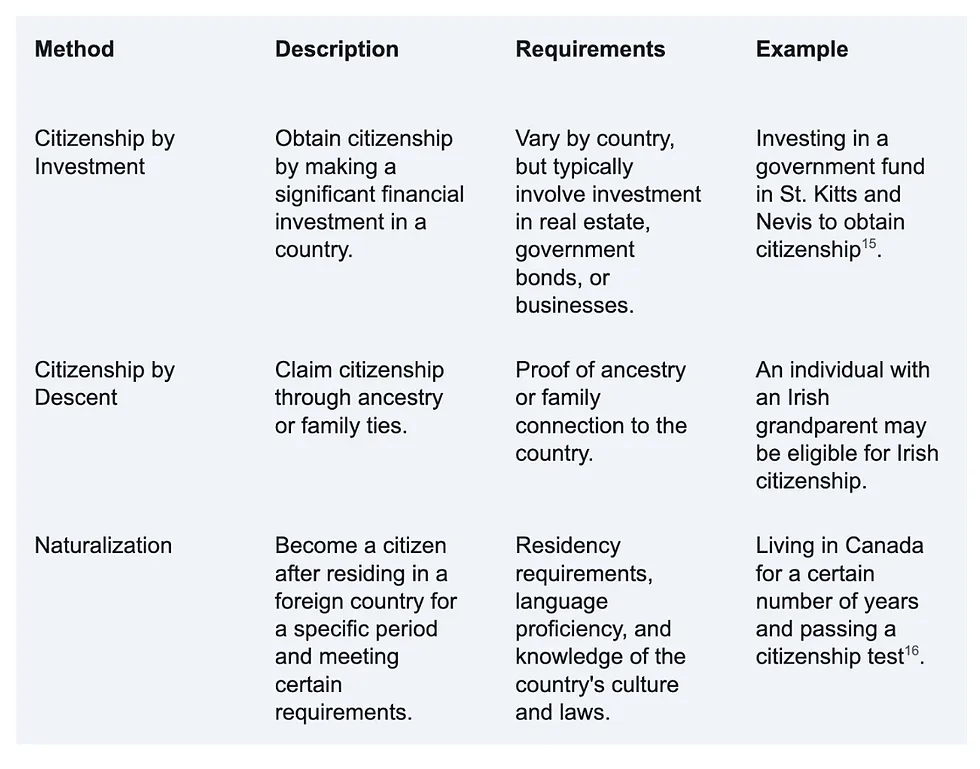
There are various ways to obtain a second passport, as summarized in the table below:
For U.S. citizens considering a second passport, it’s crucial to remember that U.S. law requires the use of a U.S. passport when entering and exiting the United States, even if they hold a second passport17.
The Bitcoin Visa Program
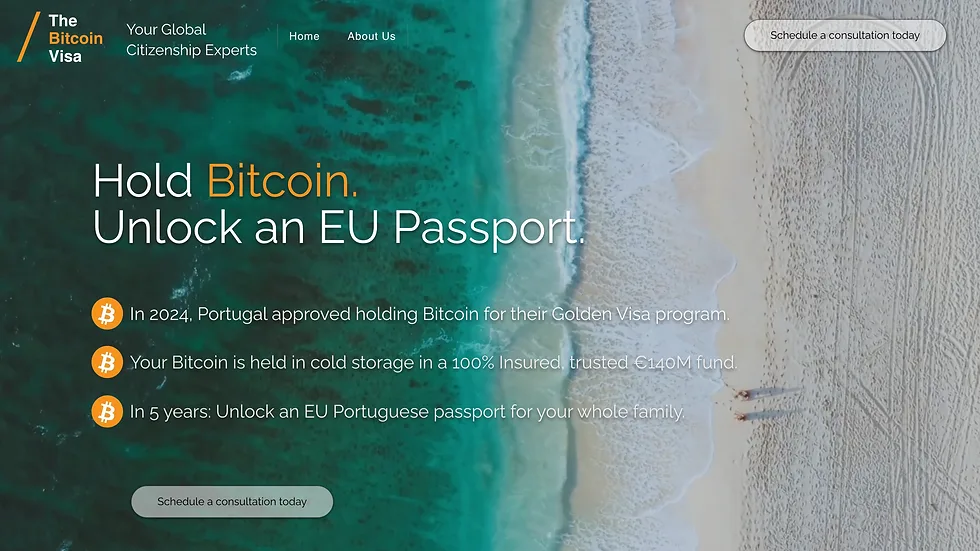
One notable development in the intersection of citizenship and digital assets is TheBitcoinVisa.com program. This program offers EU residency to Bitcoin holders in exchange for a financial contribution. Participants can gain visa-free access to the EU and may apply for citizenship after five years of residency18. This provides a unique pathway for individuals seeking to establish residency in a stable and developed region while leveraging their digital asset holdings.
Digital Assets and Decentralized Systems
Digital assets and decentralized systems are emerging as a complementary strategy for future-proofing wealth and enhancing mobility. Cryptocurrencies, like Bitcoin, offer a decentralized and potentially censorship-resistant store of value18. Decentralized finance (DeFi) platforms provide alternative financial services, such as lending, borrowing, and investing, outside the traditional banking system19.
While digital assets offer potential benefits, they also come with significant risks, and investors need to carefully assess their risk tolerance and investment goals before investing20.
Some of the potential benefits of digital assets and decentralized systems include:
Decentralization: Reduced reliance on traditional financial institutions and governments19. This can provide greater autonomy and control over one’s finances.
Censorship Resistance: Potentially greater protection against government seizure or control of assets18. This can be particularly important in countries with political or economic instability.
Global Accessibility: Easy transfer of value across borders22. This can facilitate international trade and investment.
Transparency: Increased transparency and immutability of transactions recorded on the blockchain20. This can enhance trust and accountability in financial transactions.
DePIN networks are another example of how decentralized technology can be applied to create new opportunities. These networks incentivize the development of decentralized physical infrastructure, such as data servers and energy grids, through blockchain-based incentives23. This has the potential to create more resilient and accessible infrastructure systems.
Risks and Challenges of Digital Assets
It’s crucial to acknowledge the risks associated with digital assets:
Market Volatility: Cryptocurrency prices can fluctuate significantly, leading to potential losses21. This volatility can be driven by various factors, including market sentiment, regulatory changes, and technological developments.
Regulatory Uncertainty: The regulatory landscape for digital assets is still evolving, creating uncertainty for investors21. Governments around the world are still developing regulations for cryptocurrencies and DeFi, and these regulations could significantly impact the value and usability of digital assets.
Security Risks: Digital assets are susceptible to hacking and theft21. Protecting digital wallets and private keys is essential to prevent loss of assets.
Liquidity Risks: Some digital assets may have limited liquidity, making it difficult to buy or sell them at desired prices24. This can be a challenge for investors who need to quickly convert their digital assets into cash.
Technology Risks: Investing in digital assets involves risks related to the underlying technology, including software bugs, network failures, and vulnerabilities in blockchain protocols21. These technological risks can lead to disruptions in transactions or even loss of assets.
Counterparty Risks: Transactions involving digital assets may involve counterparty risk, such as the risk of default by the other party or the failure of a trading platform21. Choosing reputable platforms and conducting due diligence on counterparties is essential to mitigate these risks.
Decentralized Protocol Risk: While DeFi offers many advantages, the decentralized nature of these protocols can create governance challenges and potential risks25. The lack of a central authority can make it difficult to address issues or resolve disputes.
It’s important to note that the digital asset ecosystem currently has limited interconnections with the traditional financial system26. However, as the ecosystem grows and evolves, these interconnections may increase, potentially leading to greater systemic risks.
Conclusion
In an era of increasing global uncertainty, individuals can take proactive steps to future-proof their wealth, safety, and mobility. By learning from historical patterns, embracing the power of a second passport, and exploring the potential of digital assets, individuals can create a more resilient and secure future for themselves and their families.
Strategic citizenship and investment are not just about financial security; they are about creating options and freedom in a world where traditional systems may be increasingly challenged. By diversifying their assets, their citizenships, and their financial strategies, individuals can navigate the complexities of the modern world with greater confidence and resilience.
The strategies discussed in this article offer a holistic approach to future-proofing one’s life:
Historical patterns: Understanding how wealth was preserved during past crises highlights the importance of cash reserves, diversification, long-term investing, and inflation hedges.
Second passports: Obtaining a second citizenship can enhance global mobility, expand economic opportunities, improve personal security, and provide access to better social services.
Digital assets: Cryptocurrencies and DeFi offer a potential avenue for diversifying investments and enhancing financial freedom, but they also come with significant risks that must be carefully considered.
For financial advisors and investors, this information provides a framework for advising clients on wealth management strategies in an uncertain world. Key recommendations include:
Assess client risk tolerance and investment goals: Understand each client’s individual circumstances and tailor recommendations accordingly.
Develop a comprehensive wealth preservation plan: Incorporate a mix of traditional and alternative investment strategies, including cash reserves, diversified investments, and potentially digital assets.
Explore second citizenship options: Discuss the benefits and requirements of obtaining a second passport with clients who may be interested in enhancing their global mobility and security.
Stay informed about evolving trends: Keep abreast of changes in the global landscape, including geopolitical events, economic trends, and technological developments, to provide relevant and timely advice.
By embracing a proactive and diversified approach to wealth management and global citizenship, individuals can navigate the challenges of an uncertain world and create a more secure and prosperous future.
Thanks again,
Jamie
Works cited
1. In Good Times Prepare for Crisis — Brookings Institution, accessed on January 23, 2025, https://www.brookings.edu/books/in-good-times-prepare-for-crisis/
2. A Guide to Statistics on Historical Trends in Income Inequality, accessed on January 23, 2025, https://www.cbpp.org/research/poverty-and-inequality/a-guide-to-statistics-on-historical-trends-in-income-inequality
3. Trends in the Distribution of Family Wealth, 1989 to 2019 | Congressional Budget Office, accessed on January 23, 2025, https://www.cbo.gov/publication/58533
4. 4 Strategies for Wealth Preservation During Economic Downturns — Whittier Trust, accessed on January 23, 2025, https://www.whittiertrust.com/four-strategies-for-wealth-preservation/
5. 5 Ways to Bolster Your Finances in a Recession | Morgan Stanley, accessed on January 23, 2025, https://www.morganstanley.com/articles/managing-finances-during-recession
6. How To Help Preserve Your Money During a Recession — Chase Bank, accessed on January 23, 2025, https://www.chase.com/personal/investments/learning-and-insights/article/how-to-help-preserve-your-money-during-a-recession
7. 7 Ways to Recession-Proof Your Life — Investopedia, accessed on January 23, 2025, https://www.investopedia.com/articles/pf/08/recession-proof-your-life.asp
8. Aftermath: Seven Secrets of Wealth Preservation in the Coming Chaos: Rickards, James: 9780525538844: Amazon.com: Books, accessed on January 23, 2025, https://www.amazon.com/Aftermath/dp/0525538844
9. How to Prepare for a Recession — Ramsey Solutions, accessed on January 23, 2025, https://www.ramseysolutions.com/budgeting/how-to-prepare-for-recession
10. Financial Crisis Books: Home — UF Business Library — University of Florida, accessed on January 23, 2025, https://businesslibrary.uflib.ufl.edu/financialcrisesbooks
11. Security and Peace of Mind: Why a Second Passport Is Your Best Plan B, accessed on January 23, 2025, https://www.henleyglobal.com/newsroom/industry-insights/second-passport-plan-b
12. holbornpass.com, accessed on January 23, 2025, https://holbornpass.com/5-key-benefits-of-holding-a-second-passport/
13. Benefits of a Second Passport | Alpen Partners International AG, accessed on January 23, 2025, https://alpenpartners.com/us/insights/benefits-of-a-second-passport/
14. Dual Citizenship: Pros and Cons, and How It Works in the U.S. — Investopedia, accessed on January 23, 2025, https://www.investopedia.com/articles/personal-finance/031315/advantages-disadvantages-dual-citizenship.asp
15. You Can Legally ‘Buy’ a Second Passport From These Countries — What to Know, accessed on January 23, 2025, https://www.travelandleisure.com/how-to-buy-a-second-passport-8734821
16. Where to Get the Best Second Passport for US Citizens in 2024 — Latitude Consultancy, accessed on January 23, 2025, https://www.latitudeworld.com/where-to-get-the-best-second-passport-for-us-citizens/
17. When Do I Need to Get a Second Passport?, accessed on January 23, 2025, https://www.passporthealthusa.com/passports-and-visas/blog/when-do-i-need-to-get-a-second-passport/
18. The Bitcoin Visa, accessed on January 23, 2025, https://www.thebitcoinvisa.com
19. Focus on: Digital Assets and Wealth Management — Legal 500, accessed on January 23, 2025, https://www.legal500.com/doing-business-in/digital-assets-and-wealth-management/
20. Decentralized Finance and Its Role in Wealth Creation — Henley & Partners, accessed on January 23, 2025, https://www.henleyglobal.com/publications/crypto-wealth-report-2024/decentralized-finance-and-its-role-wealth-creation
21. What are the risks associated with Digital Assets / Blockchain Technology / Utility Tokens?, accessed on January 23, 2025, https://republic.com/help/what-are-the-risks-associated-with-digital-assets-blockchain-technology-utility-1
22. Demystifying cryptocurrency and digital assets — PwC, accessed on January 23, 2025, https://www.pwc.com/us/en/tech-effect/emerging-tech/understanding-cryptocurrency-digital-assets.html
23. Digital Assets Are Reshaping The Physical World — Family Wealth Report, accessed on January 23, 2025, https://www.familywealthreport.com/article.php/Digital-Assets-Are-Reshaping-The-Physical-World-
24. 14 Digital Asset Risks to Remember — Commodity Futures Trading Commission, accessed on January 23, 2025, https://www.cftc.gov/sites/default/files/2022-09/DigitalAssetRisks.pdf
25. Lessons in Digital Asset Risk Management | Deloitte US, accessed on January 23, 2025, https://www2.deloitte.com/us/en/pages/audit/articles/blockchain-digital-assets-risk-management.html
26. The Financial Stability Implications of Digital Assets — Federal Reserve Board, accessed on January 23, 2025, https://www.federalreserve.gov/econres/feds/files/2022058pap.pdf